FitTrack
Tech Stack
Frontend
Backend
Database
Deployment & Tools
Overview
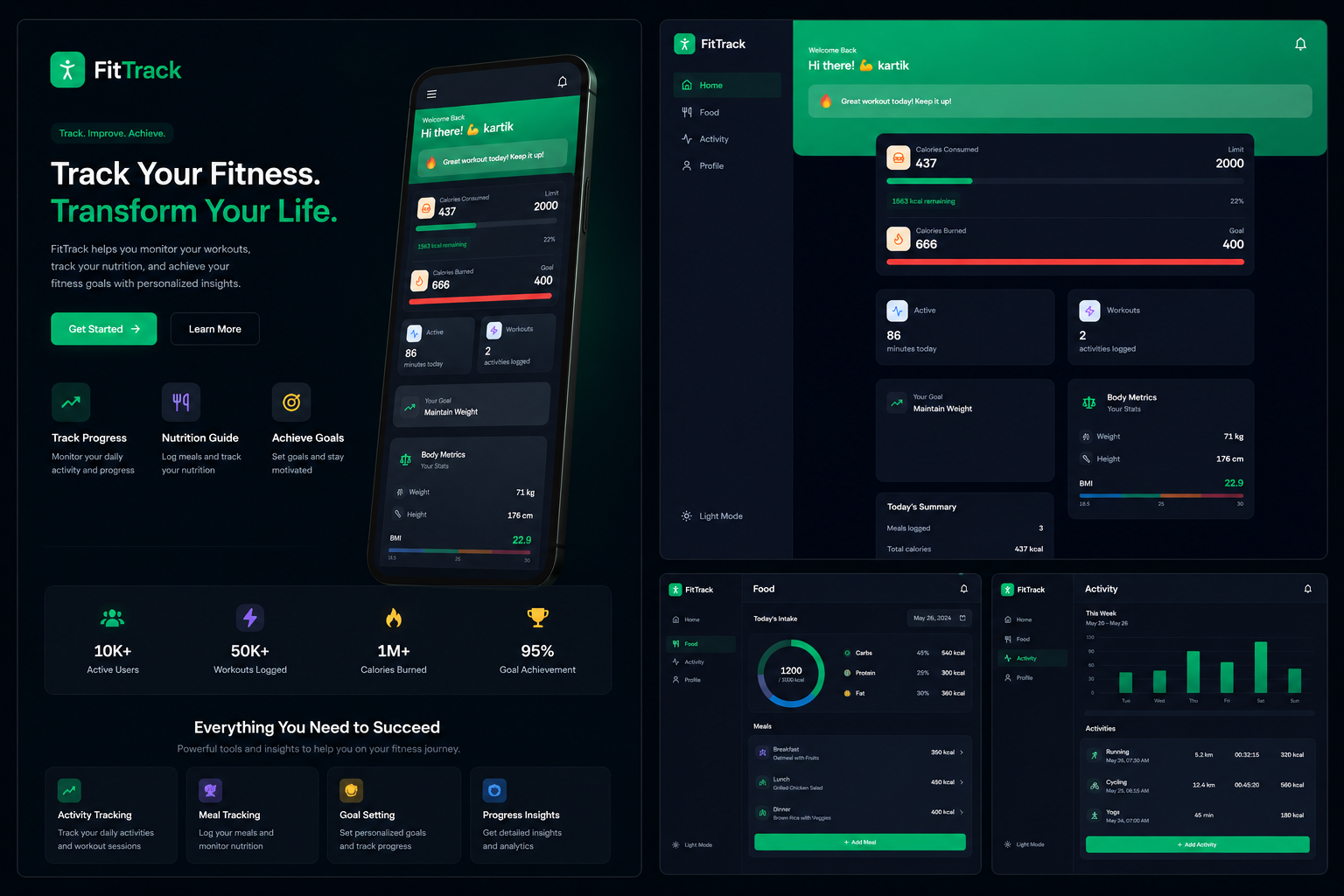
FitTrack is a modern fitness tracking web application that helps users maintain a healthier lifestyle by managing workouts, monitoring nutrition, and tracking daily progress. It provides an intuitive dashboard where users can visualize their fitness journey, set personal goals, and stay motivated through meaningful insights and analytics.
The Problem
Many people struggle to maintain consistency in their fitness routine because workout records, nutrition tracking, and progress monitoring are often scattered across multiple apps or recorded manually. This makes it difficult to analyze performance, stay motivated, and understand long-term improvements.
The Solution
FitTrack brings every aspect of personal fitness into one centralized platform. Users can log workouts, record daily nutrition, monitor calories, and visualize their progress through interactive dashboards. By simplifying data tracking and presenting meaningful insights, the application helps users make informed decisions and stay committed to their health goals.
Key Features
• Secure user authentication and personalized profiles.
• Workout logging with exercise history.
• Daily nutrition and calorie tracking.
• Interactive dashboard with fitness analytics.
• Goal setting and personal progress monitoring.
• Responsive design for desktop and mobile devices.
• Clean and intuitive user interface.
• Fast performance powered by modern web technologies.
Development Process
FitTrack was developed using a modern full-stack architecture with a strong focus on performance, scalability, and user experience. The frontend was built using React.js to create a responsive and interactive interface, while the backend manages user data securely through REST APIs. Special attention was given to designing reusable components, efficient state management, and a dashboard that presents complex fitness data in a simple and engaging way.
Challenges
One of the primary challenges was designing an efficient system to manage multiple types of fitness data, including workouts, nutrition logs, user goals, and progress history. Another challenge was creating meaningful visualizations that present health data clearly while maintaining excellent performance and responsiveness across different devices.
What I Learned
Developing FitTrack strengthened my understanding of full-stack web development, component-based architecture, REST API integration, and state management in React. I also gained valuable experience in designing user-centric dashboards, handling dynamic data efficiently, and creating responsive interfaces that provide an engaging user experience.
Future enhancements
Include AI-powered workout recommendations, personalized meal planning, wearable device integration, real-time health monitoring, achievement badges, social fitness challenges, and a dedicated React Native mobile application to provide a seamless fitness experience across all devices.